
AI-powered cameras are everywhere – from smart doorbells to industrial inspection systems to autonomous vehicles. But most product teams don’t realize there’s a fundamental architectural decision that shapes everything else: does the AI run in the cloud, or on the camera itself?
Running AI directly on the camera is called edge inference – and it changes the performance, cost, and deployment profile of your product dramatically.
What Is Edge AI in a Camera System?
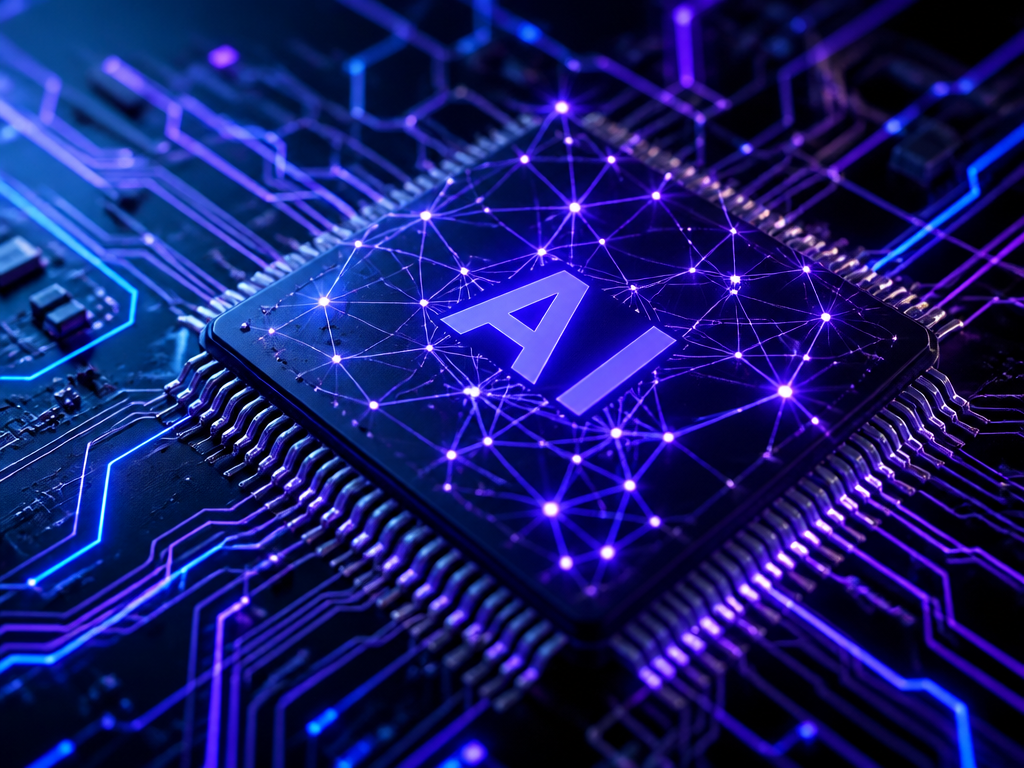
Edge AI means running a neural network or machine learning model directly on the camera’s embedded processor, without sending video to a cloud server for analysis. The camera captures an image, processes it through the AI model, and outputs a result – all locally, in real time.
Examples of edge AI camera applications:
- A security camera that detects intruders locally without uploading video to the cloud
- An industrial inspection camera that identifies defects on a production line at 60fps
- A retail camera that counts customers and analyzes traffic patterns without a network connection
- An agricultural drone that detects crop disease from aerial imagery in the field
In each case, the intelligence lives in the camera – not in a data center.
Why Edge Instead of Cloud?
Latency – cloud inference adds network round-trip time. For real-time applications — safety systems, fast production lines, robotics – milliseconds matter. Edge inference delivers results in under 10ms. Cloud inference typically adds 100ms or more.
Bandwidth – high-resolution video generates enormous data volumes. Streaming 4K video continuously from dozens of cameras is expensive and often impractical. Edge AI processes locally and sends only results – detected objects, anomaly flags, counts — not raw video.
Privacy – video of people, facilities, or processes often can’t leave the premises for legal or competitive reasons. Edge AI keeps sensitive data local.
Reliability – cloud-dependent systems fail when connectivity is lost. Edge AI works offline, which is essential for remote deployments, vehicles, and industrial environments with unreliable networks.
Cost – cloud inference at scale means paying for compute on every frame, continuously. Edge AI has a fixed hardware cost per camera with no ongoing inference fees.
The Hardware Stack for Edge AI Cameras
Running AI models on embedded hardware requires specific compute capabilities. The main options:
Dedicated AI accelerators – chips like the Google Coral (Edge TPU), Hailo-8, and Ambarella CV series include dedicated neural processing units (NPUs) optimized for inference. They offer high throughput at low power – ideal for battery-powered or thermally constrained deployments.
GPU-capable SoCs – NVIDIA Jetson modules (Nano, Orin) provide significant GPU compute for more demanding models. Higher performance, higher power consumption. Used in robotics, industrial systems, and smart cameras requiring complex multi-model pipelines.
Integrated NPUs in application processors – NXP i.MX 9, Rockchip RK3588, and similar SoCs include integrated neural accelerators alongside their application processor cores. Good balance of performance, power, and integration for mid-range applications.
FPGA-based inference – for applications requiring the highest throughput, lowest latency, or custom precision, FPGAs allow fully custom inference pipelines. Higher development cost, maximum flexibility.
The right choice depends on your model complexity, required throughput, power budget, and cost target.
Model Selection and Optimization
Not every AI model runs well on embedded hardware. Models trained for cloud inference are often too large and computationally expensive for edge deployment. Getting a model to run efficiently on embedded hardware requires:
Model selection – lightweight architectures like MobileNet, EfficientDet, and YOLO-nano are designed for edge deployment. They sacrifice some accuracy for dramatically lower compute requirements.
Quantization – converting model weights from 32-bit floating point to 8-bit integers reduces model size by 4x and speeds up inference significantly with minimal accuracy loss. Most edge AI frameworks support INT8 quantization.
Pruning – removing redundant connections in the neural network reduces compute requirements without proportional accuracy loss.
Hardware-specific compilation – AI accelerators require models compiled for their specific instruction set. The Google Coral requires TensorFlow Lite with Edge TPU compilation. Hailo requires the Hailo Model Zoo compiler. Each target requires a separate compilation step.
The Camera-to-AI Pipeline
Efficient edge AI requires tight integration between the camera capture pipeline and the inference engine. Key design decisions include:
Resolution and crop – AI models run at fixed input resolutions (typically 224×224 to 640×640). Running the full camera resolution through the model wastes compute. The image pipeline needs to resize or crop the camera output to match the model’s input resolution efficiently.
Frame rate and inference rate – the camera may capture at 30fps, but the AI model may only need to run at 5fps for your application. Designing the pipeline to decouple capture rate from inference rate saves significant compute.
Pre-processing on ISP – many AI accelerators perform better when the input is in a specific format (RGB vs YUV, specific normalization). Configuring the ISP to output data in the format the AI accelerator expects avoids costly CPU-side conversion.
Result handling – the output of inference (bounding boxes, class labels, confidence scores) needs to be handled efficiently – displayed as overlay, logged, transmitted, or used to trigger actions.
Working With a Partner on Edge AI Camera Development
Edge AI camera development requires expertise across hardware design, embedded firmware, AI model optimization, and system integration. It’s a genuinely multidisciplinary challenge – and the integration between layers is where most projects run into problems.
At PieSoft, we develop edge AI camera systems from sensor selection and hardware design through firmware, ISP tuning, model optimization, and application software. If you’re building an AI-powered camera product, get in touch – we’d be happy to discuss your requirements.
Learn more about our custom camera development services.


